

What is CAR T therapy?
CAR T is a type of immunotherapy, which means it uses the body’s own immune system to help fight the cancer. Unlike other
cancer treatments, it is made from the patient’s own T cells, which are a type of white blood cell that form part of the immune
system. The normal role of T cells is to target and remove bacteria, viruses and harmful cells like cancer cells.1,2
How does CAR T work with the immune system?
CAR T therapy works by transforming cells from a patient’s own immune system – specifically the T cells – to help them find and fight cancer cells. Normally, T cells help to find and fight off infections and cancer cells in the body.1
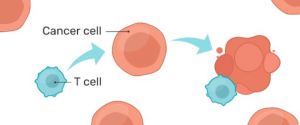
Sometimes, T cells are not able to “see” the cancer cells. This may allow cancer to grow.1

CAR T can help the T cells fight cancer again. It does this by adding a CAR to the T cells. CAR stands for Chimeric Antigen Receptor.1
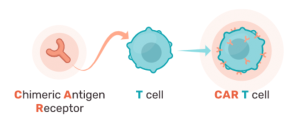
Once in the body, CAR T cells can help find and fight cancer cells.1
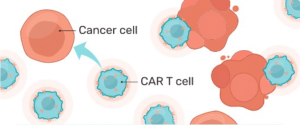
CAR T involves:1
- Collecting T cells from the blood and sending them to a specialised laboratory
- Changing the T cells into CAR T cells
- Returning these modified CAR T cells to the blood, where they may help immune cells find and fight cancer

> Read more about the journey you will take as a CAR T patient
Frequently Asked Questions
Immunotherapy is a treatment that uses the body’s immune system to kill cancer cells.2CAR T is one type of immunotherapy that uses the patient’s immune system to target cancer cells.2 Checkpoint inhibitors are another form of immunotherapy and work by removing barriers that stop the immune system from finding and attacking cancer.2 Other types of immunotherapies stimulate the immune system to help it work better against cancer.2
Different treatments are available to different people depending on their stage and type of blood cancer. These may include chemotherapy, radiotherapy, stem cell transplant, immunotherapy and CAR T therapy.3 If one type of treatment doesn’t work or the cancer keeps coming back, it’s possible that another type of treatment could still work.4
CAR T therapy may be an option if certain cancer treatments haven’t worked, or the cancer has returned after treatment.1,4
CAR T therapy works by transforming T cells to help them identify and fight cancerous cells.1 Normally, T cells help to find and fight off infections and cancer cells in the body.1 Sometimes, T cells are not able to ‘see’ the cancer cells. This may allow cancer to grow. CAR T therapy can help the T cells fight cancer again by adding a chimeric antigen receptor (CAR) to the T cells.1 Once in the body, CAR T cells can help find and fight cancer cells.1
Click here to view a CAR T cell therapy diagram.
The CAR T cell therapy process involves several key steps (CAR T cell therapy age limit applies depending on indication and product used).
- T cell collection:1,5 T cells are collected through a process called leukapheresis. Blood is collected and filtered through a special machine that separates the white blood cells from other cells in the blood. These white blood cells are then sent to a laboratory where the T cells are isolated to be turned into CAR T cells.
- CAR T cell manufacturing:1,5 In a laboratory, T cells are inserted with a gene that causes them to produce chimeric antigen receptors (CARs). These newly modified CAR T cells are then multiplied for several days to produce the number of cells required for treatment. Once quality checks have been undertaken, these cells are frozen and sent back to the treatment centre, where they are thawed before infusion.
- Preparing for treatment:1,5 While the CAR T cells are being manufactured in the laboratory, there is a waiting period of a few weeks. During this time, patients may receive ongoing cancer treatment to keep their cancer under control. This is often referred to as bridging therapy. To prepare for CAR T therapy, patients will also undergo chemotherapy at the treatment centre. This treatment is intended to remove other immune cells to make more room for the CAR T cells to multiply once infused.
- Infusion:1,5 If the patient is well enough, they will receive a single infusion of CAR T cells. These newly modified cells may be able to find and fight the cancerous cells.
- Monitoring:1,5 After the infusion, patients are monitored carefully in the treatment centre by their healthcare team. Once discharged, patients must remain within easy access of the centre for follow-up and urgent care if needed. Patients will also need to have a carer during this time, for support and to monitor for side effects.
- Follow-up: The healthcare team will arrange follow-up appointments or ongoing care as needed.
CAR T products have been registered and funded in many countries around the world since 2017 and are used routinely for some forms of lymphoma, leukaemia, and myeloma.1,6,7 To be registered, products must provide significant safety data and undertake ongoing safety reporting to regulatory agencies. In Australia, this is the Therapeutic Goods Administration (TGA).8
Like all medicines, there can be side effects, and some can be serious. CAR T is only administered in hospitals by clinicians who are well-experienced in managing these side effects, and there is additional monitoring and support for patients who receive CAR T during and after their treatment.